

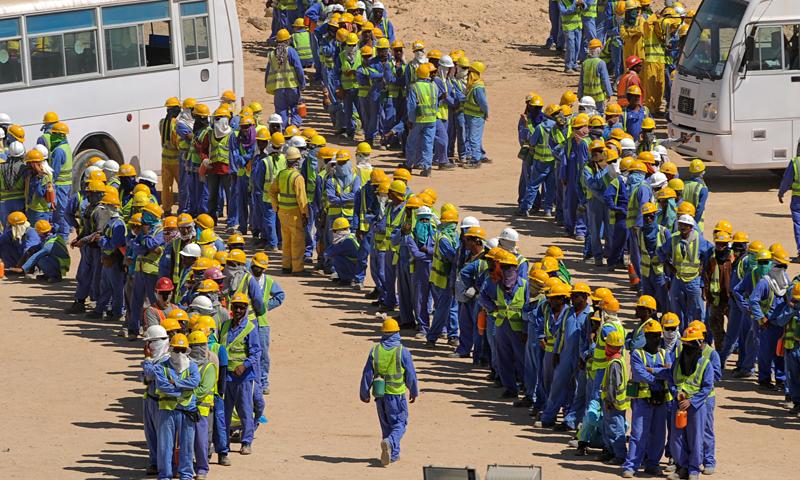
Riyadh: Saudi Arabia has officially scrapped the five-decade-old Kafala labour sponsorship system, ending a framework that gave employers inhuman control over employees, including seizing travel documents and dictating when they could change jobs or leave the country. The move was confirmed on Wednesday.
The decision is part of Crown Prince Mohammed bin Salman’s ambitious ‘Vision 2030’ reforms, aimed at diversifying the economy, attracting foreign investment, and enhancing Saudi Arabia’s global image ahead of major international events, including the 2029 Asian Winter Games. Around 13 million foreign workers, including 2.5 million Indians, are expected to benefit from the new measures.
Introduced in the 1950s, the Kafala system was designed to control the influx of skilled and unskilled foreign labourers from India and other Southeast Asian countries, particularly in construction and manufacturing sectors. Under this system, a Kafala, which could be an individual or a firm acting as a sponsor, had extensive control over a worker’s life, including decisions on workplace, wages, residence, and even filing complaints against abuse. While skilled and white-collar workers were less affected, the system faced heavy criticism from labour and human rights activists for fostering exploitation and forced labour.
Earlier this year, the International Labour Organisation (ILO) noted that immigration sponsorship systems are common globally, but highlighted that Middle Eastern models like Kafala severely restrict migrant workers’ freedom to change employers, expose them to human rights abuses, and limit internal labour market mobility.
Saudi Arabia’s reform marks a historic step in empowering foreign workers and reforming labour practices in the kingdom under Vision 2030.
With IANS inputs
