

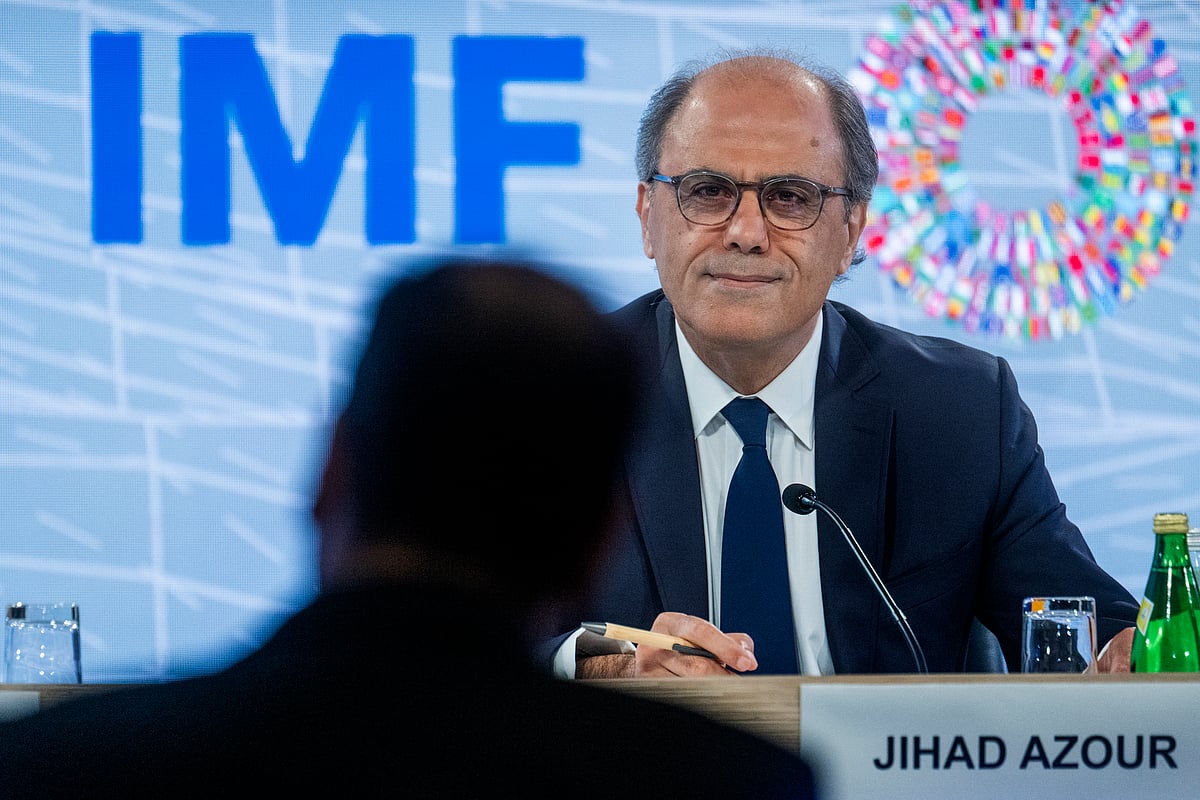
He stressed that readiness depends on education and skills. “Investment in education and in talent will be essential,” he said. “Readiness is something that is very important to expand beyond the three countries, for several countries in the region to be able to benefit and compete.”
Diversification anchors UAE and Gulf growth
Azour said the Gulf’s resilience through recent crises reflects years of reform. “The GCC countries were able to withstand several shocks, the COVID-19 crisis, the war in Ukraine, the volatility in oil prices, and the recent geopolitical tensions. This is the result of years of structural reforms that have improved market functioning, access to finance and the labour market,” he said.
While Gulf governments remain financially comfortable, Azour urged continued prudence. “They are liquid. In the short term the impact is limited, yet we are witnessing a deterioration of the surpluses, both the current-account and fiscal surplus,” he said. “In the medium term it is very important to continue the effort to diversify revenues outside oil, anchor macroeconomic policies into medium-term fiscal frameworks, and deepen financial markets so that debt and liability management does not create instability.”
Capital-market confidence and trade shifts
Regional financing conditions remain favourable. “Markets were open for issuers from the region, and so far until the end of September issues exceeded the full year of 2024 with $48 billion,” Azour said. “Despite this resilience, countries need to be very careful about the risks. They are encouraged to reduce financing needs, address the stock of debt and maintain fiscal discipline.”
Azour said Gulf economies are also poised to benefit from shifting global trade routes and new regional alliances. “The region has diversified both its sources of imports and exports and built alliances at the regional level,” he said. Strengthening business environments, he added, will help Gulf countries attract more investment and talent.
“These are emerging middle powers that could play a greater role in sectors like AI and technology,” he said. “Pursuing and accelerating those alliances will be an important factor.”
Well-regulated systems, educated workforce key to AI future
Asked about overheating in the fast-growing AI sector, Azour said the region’s financial systems remain sound. “The financial system is well regulated with strong levels of capitalisation and buffers, which would protect it from any asset adjustment,” he said. “Education, education, education, it is very important to build the skills in the region.”
He said the Gulf’s young, tech-savvy population will be central to the transition. “More than two thirds of our population is below 30, tech savvy and has the capacity to increase their skills,” he said. “Good performance in the non-oil sector, diversification of sources of income and readiness for technology and AI are providing a solid foundation for the future.”
